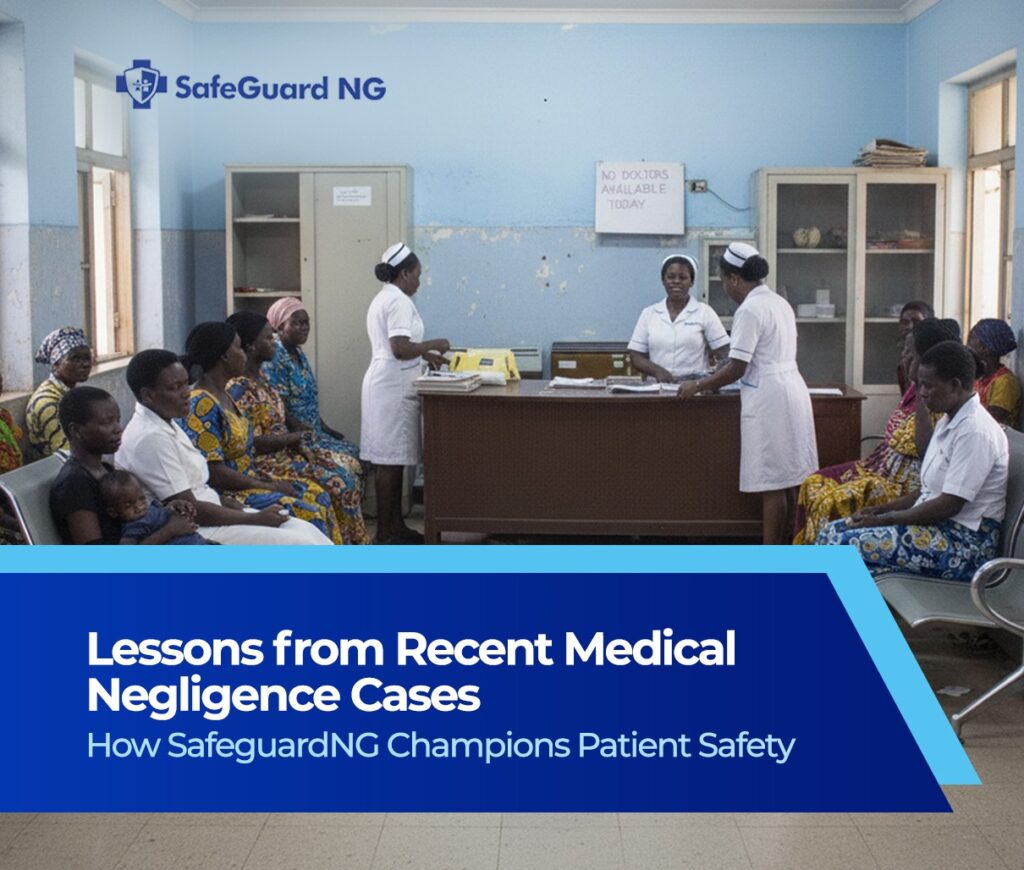
In recent months, heartbreaking healthcare mishaps in Nigeria have dominated public conversations. Stories of preventable deaths, delayed treatments, and poor emergency responses have left families grieving and citizens asking hard questions. While each case is deeply personal, they point to a broader issue: patient safety in Nigeria’s healthcare system is still far from guaranteed. These incidents are not isolated mistakes. They are warnings. And they remind us why patient protection must move from an afterthought to a priority.
What Medical Negligence Looks Like in Everyday Care
Medical negligence goes beyond dramatic headlines. It often appears in subtle but dangerous ways:
delayed attention in emergencies, misdiagnosis due to rushed consultations, inadequate monitoring after procedures, or poor communication between healthcare workers and patients.
In Nigeria, many of these issues are worsened by overcrowded facilities, overworked staff, weak oversight, and a culture where patients rarely question medical decisions. When things go wrong, families are left confused, powerless, and unsure of where to turn.
The Human Cost Behind the Headlines
Beyond statistics and trending stories are real people whose lives are permanently altered. Families face emotional trauma, unexpected medical bills, and the loss of trust in a system meant to protect them. In many cases, silence follows tragedy. Fear, lack of information, and limited accountability mean the same mistakes are repeated in other hospitals, affecting more lives. This cycle is what makes medical negligence so dangerous. When patients are not protected, everyone is at risk.
Why Patients Often Have No Shield
One of the biggest challenges in Nigerian healthcare is the lack of accessible, reliable information. Most patients walk into hospitals without knowing the facility’s track record, standards of care, or safety culture. There is little transparency, and patients are rarely empowered to ask questions or demand better. Without visibility and accountability, unsafe practices thrive.
How SafeguardNG Is Changing the Narrative
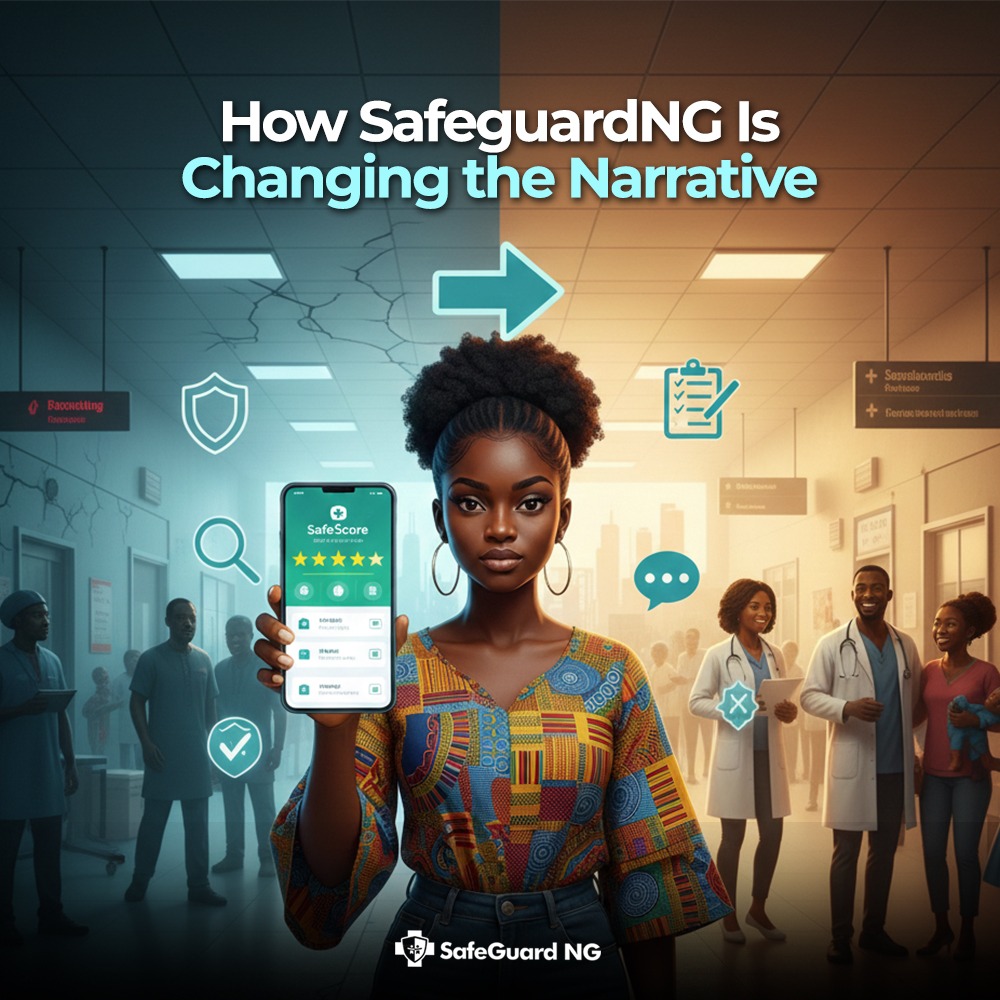
SafeguardNG exists to put patients back at the center of healthcare decisions. By focusing on transparency, awareness, and accountability, SafeguardNG helps Nigerians make safer, more informed choices before harm occurs. Through tools like SafeScores on safeguardng.com, patients can access insights on hospitals and diagnostic centres, reducing guesswork and blind trust. SafeguardNG also amplifies conversations around patient rights, healthcare standards, and systemic reform, ensuring that negligence is not ignored or normalized. Rather than waiting for another tragedy. SafeguardNG also promotes prevention: choosing the right facility, understanding what quality care looks like, and holding healthcare institutions in Nigeria accountable.
Prevention Starts with Information
The truth is simple: informed patients are safer patients. When people know what to expect from a healthcare provider, they are better equipped to spot red flags, ask questions, and seek alternatives when necessary. SafeguardNG empowers Nigerians to take control of their healthcare journey, shifting the balance from blind faith to informed decision-making. Medical negligence should never be treated as normal. Every patient deserves safe, dignified, and competent care, without compromise.
As conversations around healthcare failures grow louder, one truth stands out: change starts with awareness. On SafeguardNG, patients can check SafeScore to understand how hospitals and diagnostic centres perform, before making critical healthcare decisions.
By simply signing up on safeguardng.com, you can also add your hospital review, share your experience, and help others choose safer options. Safer healthcare is possible when we stay informed and collectively refuse to ignore preventable harm.